Programs & Events
The Art of Dealing with Difficult Personalities
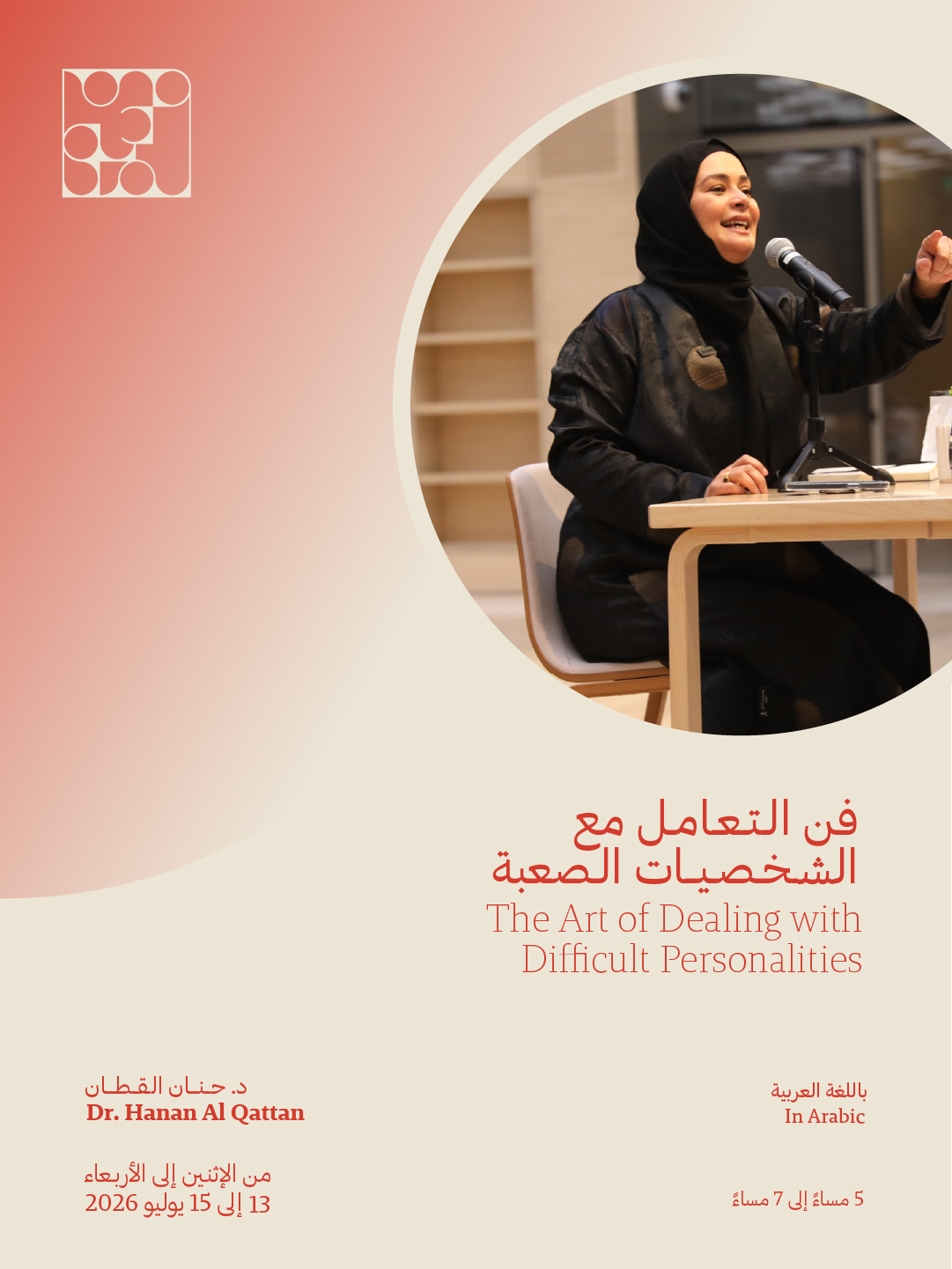
Join us in this practical program designed to enhance your ability to understand and manage difficult personalities consciously and flexibly. We begin this journey with tools for d..
- Developmental Programs
- Ar
- Register
About this Program
Join us in this practical program designed to enhance your ability to understand and manage difficult personalities consciously and flexibly. We begin this journey with tools for discovering yourself and regulating your reactions, and conclude with ways of positively influencing others. The program explores different personality types and how to read them effectively, providing practical tools for responding calmly, setting boundaries, and transforming tension into constructive dialogue. It also covers skills for managing conflicts before they escalate, and navigating relationships in work and family settings without feeling exhausted. We will transition in the end from merely managing difficult situations to building fruitful relationships based on influence and robust communication.
Know yourself before you know others: • How does your personality influence your interaction with others? • What triggers your reactions? • The concept of emotional triggers and how to manage them The difficult personalities map: • The most common difficult personality types (the domineering, the grumbler, the reticent, the temperamental, the narcissist, the victim) • How to quickly and intelligently read a person's personality • The difference between genuine and situational difficulty Smart response tools: • When to speak and when to remain silent • The art of setting boundaries without conflict • Reframing techniques to transform tension into dialogue Managing conflict before it explodes: • The stages of conflict and when to intervene • Distinguishing between the problem and the person • An effective calming model for critical situations Relationships in different environments: • Difficult personalities in the workplace • Difficult personalities in the family and social circles • How to protect your energy when dealing with them daily From management to influence: • How to transform a difficult relationship into a productive one • The art of winning hearts without compromising principles • Building bridges of communication with those you disagree with
Meet our Instructor
(1).png)
Dr. Hanan Al-Qattan
Dr. Hanan Al-Qattan is the founder and director of the Itizan Centre for Psychological and Educational Counseling and Training. She holds a Doctor ate in Shari’a with Honors, specializing in psychiatric disorders and their impact on Shari’a provisions, along with a Higher Diploma in Psychological Education.
Dr. Hanan is also a certified international trainer in personality development, psychological counselling, and family stability, with expertise in REBT, CBT, and DBT. She is also the founder of the Inner Peace Volunteer Team for Psychological Support and the Psychological Self-Jurisprudence Project, which integrates psychological guidance with the Qur’an and Sunnah. Dr. Hanan is an author who has written therapeutic stories for children, including Duhaa, The Moon, and an interactive book for girls, Hope and Peace, Leader of Orphans.
Recommended For You
 Paid
Paid
Why Did I Choose That? Understanding Your Decisions
- Developmental Programs
- En
 Paid
Paid
With a Full Heart: Understanding Refugee Trauma and Sustaining Yourself as a Volunteer
- Developmental Programs
- En